
Cooper Commons Lawn Edging Services
Choose our Lawn Edging for precision-crafted borders that enhance curb appeal, prevent grass overgrowth, and give your landscape a polished, professional look that lasts.
Get a Free QuoteOur Cooper Commons Landscaping & Yard Care Services
When to Schedule Lawn Edging in Cooper Commons, Arizona – Seasonal Guide
In Cooper Commons, Arizona, the best times to schedule lawn edging are typically in early spring and late fall. These periods align with the region’s mild temperatures and reduced risk of extreme weather, making it easier to achieve crisp, clean edges that last. The local climate, characterized by hot, dry summers and mild winters, means that edging during the peak heat or just before the first frost can stress your lawn and reduce the effectiveness of the service. Neighborhoods near the Chandler Municipal Airport and the Paseo Vista Recreation Area often experience microclimates, with varying shade coverage and soil types that can influence the ideal timing for lawn care.
Environmental factors such as the area’s clay-heavy soils, sporadic monsoon rains, and the risk of drought all play a role in determining when to edge your lawn. Homeowners should also consider municipal guidelines and water restrictions, which can impact when and how often lawn maintenance is performed. For more information on local regulations, visit the official municipal website.
Local Factors to Consider for Lawn Edging in Cooper Commons
- Tree density and shade coverage, especially near Veterans Oasis Park
- Soil composition (clay vs. sandy areas)
- Seasonal precipitation and monsoon patterns
- Risk of frost in late fall and early spring
- Municipal restrictions on water usage and landscaping
- Terrain variations, such as sloped yards or drainage zones
Benefits of Lawn Edging in Cooper Commons
Enhanced Curb Appeal
Defined Landscape Borders
Reduced Lawn Maintenance
Weed Growth Prevention
Improved Property Value
Professional Installation Expertise
Cooper Commons Lawn Edging Types

Steel Lawn Edging
-
Plastic Landscape Edging
-
Concrete Curb Edging
-
Brick Lawn Edging
-
Natural Stone Edging
-
Wood Timber Edging
-
Rubber Landscape Edging
Our Lawn Edging Process
Site Evaluation
Marking Edges
Cutting the Edge
Debris Removal
Final Inspection
Why Choose Cooper Commons Landscape Services
-
Cooper Commons Homeowners Trust Us
-
Expert Lawn Maintenance
-
Reliable Irrigation Solutions
-
Comprehensive Weed Control
-
Competitive Pricing
-
Professional Team
-
Satisfaction Guarantee
Coordinating Lawn Edging Services With Cooper Commons Municipal Infrastructure Programs
Cooper Commons is a master-planned community located within the City of Chandler, situated in the Phoenix metro low-desert region of Maricopa County. Lawn edging along sidewalks, driveways, and curb lines in this community requires awareness of how the City of Chandler manages public right-of-way maintenance, green waste collection, and stormwater infrastructure. Residents and property managers should confirm current green waste disposal procedures through the city before placing edging debris at the curb, as clippings and soil fragments from edging operations must not enter storm drain inlets or gutter flow lines. The Chandler Public Works & Utilities Department oversees street infrastructure, solid waste coordination, and right-of-way maintenance relevant to edging work performed near public sidewalks and curb faces.
- Edging debris such as soil, turf runners, and grass clippings must be swept or collected rather than left in gutters or curb inlets
- Properties adjacent to public sidewalks should verify right-of-way boundaries before edging along city-maintained hardscape
- Green waste generated from edging should be handled according to the city's current collection or drop-off guidelines
Chandler Public Works & Utilities Department
Official Website: Chandler Public Works & Utilities Department
How Cooper Commons's Low-Desert Heat and Alkaline Soils Affect Lawn Edging
Cooper Commons sits within USDA Hardiness Zone 9b, where summer temperatures routinely exceed 110°F and soils are characteristically alkaline with a pH often above 8.0. These conditions directly influence how lawn edges behave and how edging work should be approached. The predominant soil profile in this part of Chandler typically includes alkaline sandy loam over compacted subdivision fill, with caliche layers possible at varying depths. Bermudagrass, the dominant warm-season turf in Cooper Commons, produces aggressive stolons and rhizomes that rapidly encroach onto hardscape surfaces, requiring more frequent edging than cool-season turf varieties. During winter overseeding with perennial ryegrass, edge definition can blur as the ryegrass establishes along borders. The University of Arizona Cooperative Extension provides region-specific guidance on bermudagrass growth patterns relevant to edging frequency.
- Reflected heat from concrete driveways and block walls accelerates turf runner growth along hardscape edges
- Alkaline soils and irrigation water with elevated salt content can cause mineral deposits along curb lines, complicating clean edge cuts
- Monsoon-season runoff can erode exposed soil at freshly edged borders, particularly on lots graded toward the street
- Irrigation overspray along property edges promotes turf creep onto sidewalks and into decorative rock beds
Navigating Cooper Commons's Stormwater and Code Compliance Rules for Lawn Edging
Lawn edging in Cooper Commons falls under several regulatory considerations administered by the City of Chandler and the State of Arizona. While edging itself does not typically require a permit, the activity generates soil and organic debris that must be managed in compliance with stormwater regulations. The City of Chandler operates under Arizona DEQ Phase II MS4 requirements, which mandate that sediment, grass clippings, and landscape debris be prevented from entering the municipal storm sewer system. Under the Clean Water Act, discharges of pollutants—including landscape sediment—into waters of the United States through storm drain systems are regulated at both federal and state levels.
- Edging operators must collect all displaced soil and turf material rather than washing or blowing it into street gutters or storm drains
- Properties near retention basins or drainage channels within Cooper Commons should take additional care to stabilize exposed soil after edging
- HOA landscape standards within Cooper Commons may specify edge maintenance frequency and appearance requirements; residents should verify current CC&R provisions
- Noise ordinances administered by the City of Chandler may restrict the hours during which powered edging equipment can be operated in residential areas
Chandler Environmental Management
Official Website: Chandler Environmental Management
The Arizona DEQ Stormwater program provides additional guidance on best management practices for preventing landscape-related pollutant discharge.
Timing and Methods for Professional Lawn Edging in Cooper Commons's Climate
Professional lawn edging in Cooper Commons should be timed around the active growth cycles of bermudagrass and the community's irrigation patterns. During the primary growing season from April through September, bermudagrass stolons can extend across hardscape borders within days of mowing, making edging a necessary complement to each mowing cycle. The Turfgrass Maintenance Guide for Low Elevation Arizona from the University of Arizona provides detailed guidance on turf management timing applicable to edging schedules.
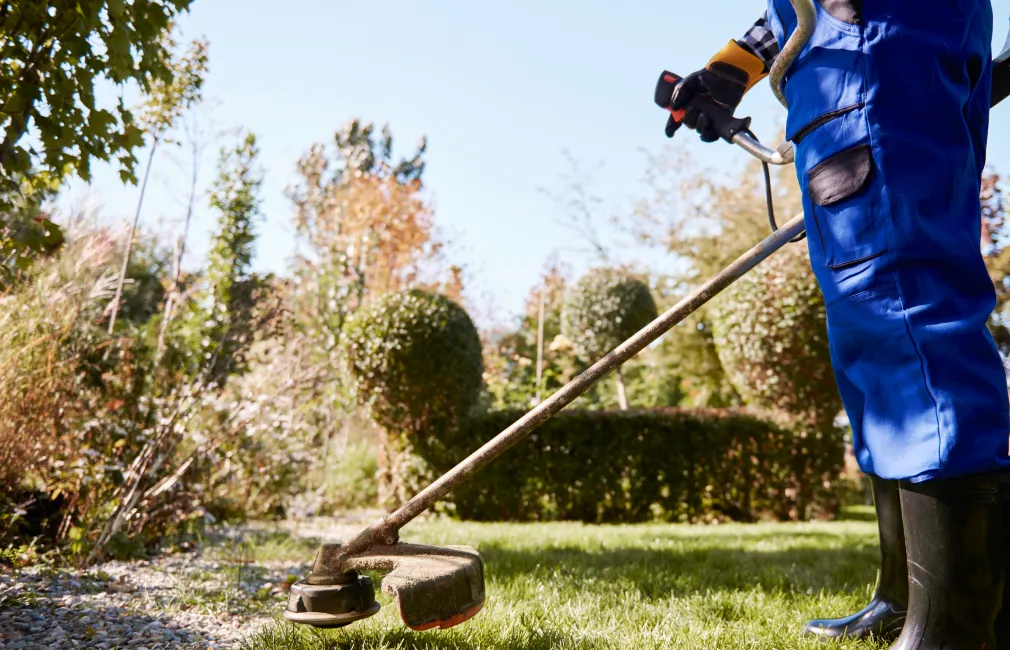
- Mechanical blade edgers produce the cleanest vertical cut along concrete and are preferred for curb and sidewalk borders in subdivision settings
- String trimmers may be used for bed edges and irregular borders but should be operated carefully to avoid scalping turf crowns
- Edging depth of approximately 2–3 inches is generally sufficient to sever bermudagrass runners without damaging irrigation lines installed near hardscape
- Early morning edging, before peak heat, reduces operator fatigue and limits turf stress from exposed root zones during extreme afternoon temperatures
- During winter overseeding periods, edging should be performed with reduced aggression to avoid disrupting ryegrass establishment along borders
- All edging debris should be swept from hardscape surfaces immediately to prevent material from migrating into curb inlets during irrigation cycles or monsoon rainfall
Residents should also be aware that irrigation overspray along edged borders can undermine clean lines and promote rapid regrowth; adjusting spray heads and drip emitters near hardscape edges supports longer-lasting results. The Arizona Department of Water Resources landscaping page offers water conservation guidance that applies to irrigation management near edged turf borders.
What Neighborhoods Do We Serve Throughout Cooper Commons, AZ?
- Cooper Commons Phase 1 — Established lots with mature bermudagrass lawns and concrete sidewalk borders that require consistent edging to prevent turf encroachment onto shared walkways
- Cooper Commons Phase 2 — Newer construction with compacted subdivision fill soils that may settle along hardscape edges, requiring periodic re-establishment of clean edge lines
- Cooper Commons Phase 3 — Properties with proximity to community retention basins where edging debris management is particularly important for stormwater compliance
- Cooper Commons Parks and Common Areas — Shared landscape zones maintained under HOA oversight where edging standards contribute to uniform community appearance along streetscapes and pathway borders
- Cooper Commons Perimeter Lots — Homes bordering major roadways or commercial parcels where reflected heat from adjacent pavement intensifies bermudagrass runner growth along property edges